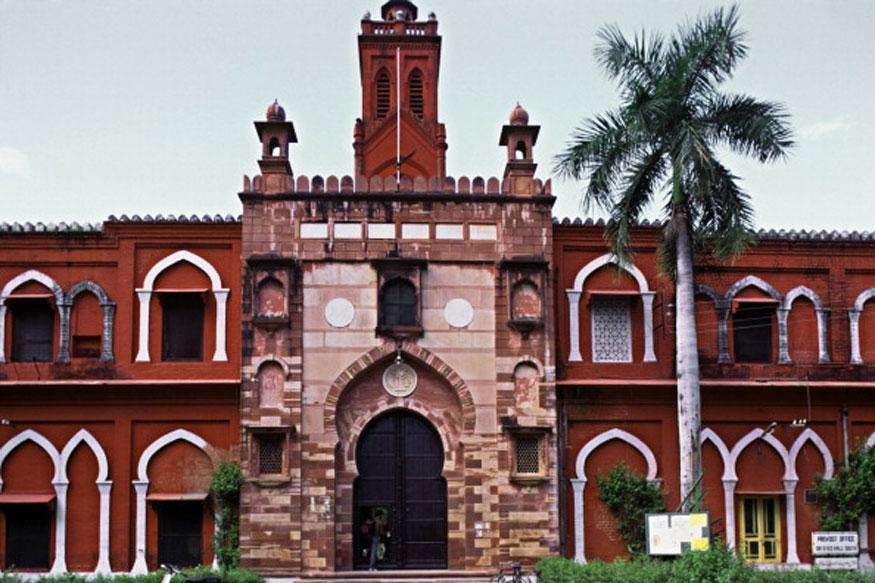
Aligarh is a city in the state of Uttar Pradesh in India. It is the administrative headquarters of Aligarh district and lies 342 kilometres northwest of state capital Lucknow and approximately 130 kilometres southeast of the capital, New Delhi
History
Written references to the city commence only from 12th century onward; however, archaeological records suggest that the town used to be inhabited by Jains.[6] The area of Aligarh before the Ghurid conquest of the region was under the sway of Dor Rajputs in 12th century.[4]
In 1194, Qutb-ud-din Aibak mounted a successful invasion of the region and Hisam-ud-din Ulbak was installed as the first Muslim governor; court-historian Hasan Nizami noted Kol to be “one of the most celebrated fortresses of Hind”.[6] Beginning the 13th century, the place featured — as Kol or Koil — in multiple Persian (as well as non-Persian) Sultanate sources as a center of economic prominence, especially for production of distilled wine.[4][6]By the mid-13th century, the town commanded enough importance for (would-be Sultan) Ghiyas ud din Balban to erect a minaret.[6]
Under the Khiljis and Tughlaqs, the prominence continued unabated; it had become an Iqta by the times of Alauddin Khalji.
Battle of aligarh (1803)
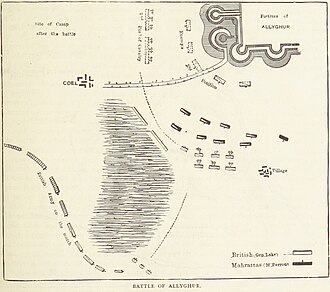
The Battle of Aligarh was fought on 1 September 1803 during the Second Anglo-Maratha War (1803–1805) at Aligarh Fort. The British 76th Regiment, now known as the Duke of Wellington’s Regiment besieged the fort, which was under the control of the French officer Perron, and established British rule. In 1804, the Aligarh district was formed by the union of the second, third and fourth British divisions with the addition of Anupshahr from Muradabad and Sikandra Rao from Etawa. On 1 August 1804, Claude Russell was appointed the first Collector of the new district.[7]
Education
Universities and Csollege
- Aligarh Muslim University
- Ibn Sina Academy of Medieval Medicine and Sciences
- Jamia Al-Barkaat
- Mangalayatan University
Schools